“Found them through internet search. Requested mobile installation. They called back within 2 hours to set up an appointment. Turns out they had a shop near me, which saved me 50% on installation cost. Took about an hour.
Prompt, quick, professional service. So much cheaper than getting another car. I would highly recommend their service to anyone who needs a hybrid battery replacement.”

Chris Walker
January 2, 2025
”I was so grateful that my friend told me about this company. What I thought was going to be a $8,500.00 repair, as quoted to me by my regular auto shop, turned into a $2,400.00 repair. I will be forever grateful to Greentec EV & Hybrid Batteries. Thank you guys so much. Their customer service was excellent over the phone, and my experience with the technician that came to my home to do the repair was also excellent. I can’t thank you all enough. You really saved me!!”
Lisa Tufano
January 10, 2025
”The hybrid battery on my prius started dying and I managed to drove to the shop so I left it with them and told me they’ll finish it by tomorrow at 11am but they done it a lot earlier and faster than I expected. The car was running great again with the purchased of 12 month warranty remanufactured. I’m highly satisfied with the work they’ve done and I recommended them big time.”
Ellrick Garcia
February 13, 2025



Why pay more at the dealership? At Greentec Auto, we offer affordable, accessible and reliable hybrid battery replacements at up to 50% less than dealership prices without compromising on quality. Get the best value with expert service, mobile installation, and a warranty you can trust.

The cost of shipping to you is included with your purchase. This offer is good for the entire continental United States. Add $200 for shipping to a residential address. Let Greentec Auto make it simple to return your core to us, ask about our reduced return shipping rates.

A refundable “core deposit” of $500.00 will be added to your order at checkout. Once we receive your old battery, we will refund the core deposit back to you minus the cost of return shipping. Cores must be returned within 45 days of purchase. This applies to shipping orders only. In all other circumstances, the core will be picked up at the time of service, no deposit required.

Once your new hybrid battery has arrived, put the core battery back into the same packaging your battery arrived in. As soon as we receive your core battery, we will refund the core deposit back to you. It’s that easy.
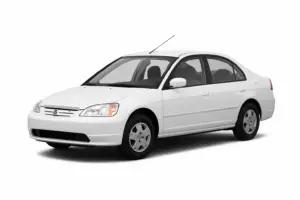
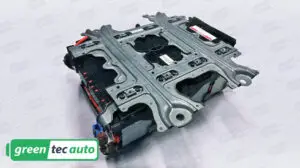
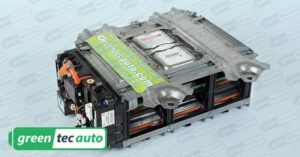
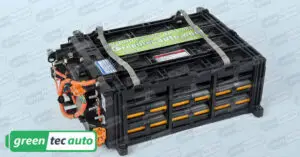
Replacement IMA battery packs for 2003 to 2015 Honda Civic Hybrids, $1,399 to $2,891 CAD, with warranty terms from 12 to 36 months on most qualifying batteries. Shipped across Canada or installed at more than 30 Greentec Auto locations across Canada, the United States, and the United Kingdom.
Prices shown may not be current. Check the product listing for the exact price before ordering.
The Civic Hybrid is the car that taught Canadians what a hybrid battery costs. Honda sold it here for thirteen model years, across three completely different battery designs, and the Integrated Motor Assist pack in every one of them is now past the end of its factory coverage. If the IMA light is on in your dash and you are trying to work out what your options are, this page covers the three generations, what each pack costs to replace in Canadian dollars, what the warning lights actually mean, and the two avenues of Honda help that have now closed permanently.
Most pages about this car skip straight to pricing. That is the wrong starting point, because almost every Canadian Civic Hybrid owner arrives with the same two questions: is Honda still on the hook, and was there not some kind of lawsuit? Both answers are now settled, and both are documented.
This is not an estimate. Honda Canada’s own warranty guide lists the IMA battery assembly in the covered-parts table with a symbol defined in the key as: “Indicates parts covered for 8 years/160,000 Km.” Every other IMA component, the motor, the power drive unit, the control modules, sat at the standard three years or 60,000 km.
That 160,000 km figure is worth noticing, because it is more generous in distance than the baseline figure American owners got outside the California emissions states. Honda Canada gave the pack itself a longer leash than the rest of the hybrid system by a wide margin.
It does not help you now, and the arithmetic is simple. The last Civic Hybrid Honda sold in Canada was a 2015. A 2015 that went into service in late 2014 ran out of calendar coverage in 2022. A 2015 that was still on a dealer lot into 2015 ran out in 2023. There is no in-service date anywhere in the model’s history that leaves a Civic Hybrid inside eight years today. Every single one has aged out on the calendar leg, regardless of odometer reading. A 2008 Civic Hybrid with 90,000 km on it is just as far outside coverage as a 2008 with 400,000 km.
This part surprises people, because the coverage at the time was mostly American. Canadian Civic Hybrid owners had a separate, parallel legal action of their own, filed in a Canadian court under Canadian consumer protection law.
Consumer Law Group filed a national class action on 16 March 2012 in the Superior Court of Quebec at the Montreal courthouse. The allegations were threefold: that the advertised fuel economy figures for the 2003 to 2009 Civic Hybrid could not be achieved in normal driving, that the IMA battery system in 2006 to 2008 cars was defective, and that a software update Honda issued around August 2010 degraded both performance and fuel economy.
The class covered past and present owners and lessees of 2003 through 2009 Civic Hybrids in Canada. A subclass covered 2006 through 2008 cars specifically, the years where the battery and software allegations applied. A proposed national settlement was reached on 18 August 2014 and approved by judgment on 4 November 2014.
What the settlement actually delivered, for the record:
| Benefit | Who got it | Amount |
|---|---|---|
| Cash payment for fuel economy dissatisfaction | 2003 to 2009 owners and lessees | $100 |
| Additional cash for IMA battery or software update dissatisfaction | 2006 to 2008 subclass only | $100 more, capped at $200 total |
| Rebate certificate, Option A | 2003 to 2009, requires selling or trading the Civic Hybrid, non-transferable | $1,000 toward a new Honda or Acura |
| Rebate certificate, Option B | 2003 to 2009, no trade-in needed, transferable once | $500 toward a new Honda or Acura |
| Extra Option B certificate | 2006 to 2008 subclass only, combinable | One more $500 |
| IMA battery cost reimbursement | 2003 to 2006 cars, pack replaced within 20,000 km or 12 months after warranty expiry | Parts and labour |
| IMA warranty extension | 2006 to 2008 subclass, applied to still-active warranties only | 12 months or 20,000 km, whichever came first |
Look closely at the last line, because it is the part that matters most and the part most commonly misremembered. The extension was not years. It was 12 months or 20,000 km, and it only attached itself to warranties that were still live at the time. It was a modest top-up, not a reopening.
The claims deadline was six months after the Effective Date, which the notice to class members set no earlier than 30 May 2015. The claims administrator’s website has since gone offline. Participation is closed. There is nothing left to file.
So the honest summary for a Canadian Civic Hybrid owner in 2026 is this: Honda acknowledged the IMA pack issue on the 2006 to 2008 cars in a Canadian court, paid out, added a year of coverage to whoever still had coverage, and closed the file eleven years ago. Replacement at your own cost is the only remaining path. That is not a sales argument, it is just where the paperwork ended up.
One useful side effect of knowing this: if you own a 2006, 2007 or 2008 Civic Hybrid and a shop tells you the pack failure is unusual or suggests you were unlucky, you are holding a court-approved settlement that says otherwise. Those three model years were the ones Honda settled over. The second-generation pack has the worst field record of the three, and that is reflected in the legal history, not just in forum anecdotes.
This is where most owners actually start, so it belongs near the top. The Civic Hybrid has several different ways of telling you something is wrong with the hybrid system, and they do not all mean the same thing.
An amber light reading IMA. This is the hybrid system’s own warning lamp. It comes on when the IMA control unit has stored a fault code. It does not tell you the pack is dead, and it does not tell you the pack is fine. It tells you a code exists and needs to be read.
A lit IMA light with no other symptoms sometimes traces to a sensor, a connector, or the motor control unit rather than the pack itself. A lit IMA light alongside collapsing charge bars and lost assist is a much more specific picture.
A text message in the multi-information display on later cars. Same underlying meaning as the IMA lamp: a code is stored, and the system wants attention. Owners search for this phrase constantly because it reads like an instruction rather than a warning.
The gauge on the right side of the cluster shows pack state of charge. The bars on the left show assist and regeneration activity. These two displays, watched over a week of normal driving, tell you more about pack health than any single warning light.
A healthy pack holds somewhere in the middle of the gauge most of the time, charges on braking and coasting, and discharges on acceleration, moving in a reasonably smooth band. Honda’s own guidance was to keep the pack in the region of 50 to 60 percent charge, and a healthy pack lives there on its own.
A pack at the end of its life does something different and distinctive. It charges to full in a short distance, then dumps to empty under light load, then recharges to full again. The gauge swings from one end to the other instead of hovering. This happens because the cells have lost usable capacity, so the same amount of energy that used to move the gauge two bars now moves it six. The battery control module is reading real voltage; there just is not much capacity left between full and empty.
If you are watching this happen, that is the single most reliable symptom of a worn NiMH pack, and it usually appears before any code sets.
On a declining pack you may notice the engine running at higher revs while stationary, apparently charging the battery for no reason, or the gauge resetting itself to a different position after a drive. The control module runs calibration routines to re-learn where full and empty actually are. On a worn pack it runs them more often and more aggressively, because its stored map keeps turning out to be wrong.
Drivers frequently interpret this as the car trying to fix itself. It is closer to the opposite: the car is repeatedly discovering that the pack no longer matches what it expects.
The Civic Hybrid went through three distinct hybrid generations in Canada, and the battery changed fundamentally at each break. Ordering for the wrong generation is the most common mistake on this car, because the body style and the model name carried on while the pack underneath changed completely.
| Generation | Model years | Pack voltage | Chemistry | Cell count | Notes |
|---|---|---|---|---|---|
| First | 2003 to 2005 | 144 V | Nickel metal hydride | 120 cells at 1.2 V | Cannot move the car on electricity alone, assist only |
| Second | 2006 to 2011 | 158.4 V | Nickel metal hydride | 132 cells at 1.2 V | Limited electric-only operation in some conditions, worst field record of the three |
| Third | 2012 to 2015 | 144 V | Lithium-ion | Sealed module construction | Different chemistry entirely, different recycling path, highest replacement cost |
Three things follow from that table.
The 2006 to 2011 pack is higher voltage but smaller in capacity than the first-generation pack. Honda raised the voltage and shrank the cells. That design carries the heaviest failure history in the field, and as noted above, it is the generation Honda settled a Canadian class action over.
The 2012 to 2015 pack is lithium-ion, not nickel. This is the single most-missed fact about this car. If you own a 2013 Civic Hybrid, nothing written about NiMH stick replacement, grid charging or cell balancing on a 2007 applies to you. It is a different chemistry with a different failure pattern, a different recycling route and a materially higher replacement price.
Model year alone is not quite enough at the boundaries. A 2005 and a 2006 are one calendar year apart and share no battery parts. A 2011 and a 2012 are one year apart and share no battery chemistry. Order against your exact year so fitment and programming are confirmed before anything ships.
This question gets asked constantly, usually by someone staring at a quote and doing mental arithmetic. It deserves a direct answer rather than a sales deflection.
Technically, yes, for a while. Practically, it is a bad plan, and in a Canadian winter it is worse than people expect.
Here is what is actually true. The Civic Hybrid does have a conventional starter motor in addition to the IMA motor. The IMA motor normally spins the engine, including on every Auto Idle Stop restart, but Honda fitted a backup starter that takes over when the high-voltage system is inactive. So a car with a dead pack will generally still start and still drive.
What you lose is substantial:
Searches for bypass solutions on this car are common. Be clear-eyed about what they are. A bypass does not restore the hybrid system, it disables it and persuades the car to stop complaining about the absence. You keep driving a Civic that now weighs what a hybrid weighs, carries the hybrid’s gearing and tuning, has no assist, no regeneration and no idle stop, and still has the low-voltage charging question to answer. You also have a vehicle that is considerably harder to sell in a private transaction, because the first thing any informed buyer in Canada checks on a Civic Hybrid is the pack.
For a car worth meaningfully more than the pack costs, replacement is the rational choice. For a car that is genuinely at the end of its life for other reasons, body rot from road salt, transmission trouble, structural damage, the honest answer is that no battery is worth putting into it, and we will tell you that rather than sell you one.
All prices in Canadian dollars, taken from current listings.
| Model years | Battery | Warranty | Price CAD | Previously |
|---|---|---|---|---|
| 2003 to 2005 | Remanufactured | 12 months | $1,399 | $1,749 |
| 2003 to 2005 | New 8.0 amp cells | 36 months | $1,699 | $2,749 |
| 2006 to 2011 | Remanufactured | 12 months | $1,399 | $1,850 |
| 2006 to 2011 | High-capacity cells | 24 months | $1,699 | $2,050 |
| 2006 to 2011 | New 8.0 amp cells | 36 months | $2,099 | $2,999 |
| 2012 to 2015 | Remanufactured | 18 months | $2,449 | $2,999 |
| 2012 to 2015 | New generation cells | 36 months | $2,891 |
Prices shown may not be current. Check the product listing for the exact price before ordering.
The spread is $1,399 to $2,891. Two things drive position within that range: which generation you own, and whether you take remanufactured or new cells.
New cells are not the same product as remanufactured cells, and we will not pretend otherwise. A remanufactured pack is built from tested, graded used cells assembled into a balanced pack. It is a real repair with a real warranty and it is the right answer for plenty of owners. New cells are a better battery: fresh capacity, no accumulated cycle history, and the longest warranty term we offer. The price difference reflects a genuine difference in what you are buying, not a marketing tier.
Look at the 8.0 amp cell listings specifically. The first-generation pack left the factory at roughly 6.5 amp hours per cell. The new-cell option is built with 8.0 amp hour cells. That is more usable capacity than Honda originally fitted, which is why it carries the 36-month term.
The 2003 to 2005 new-cell option is the standout value on this page. At $1,699 with 36 months, it costs the same as the 2006 to 2011 high-capacity option that carries 24 months, and $400 less than the 2006 to 2011 new-cell pack. First-generation owners are getting the longest warranty term at close to the lowest price on the page.
The 2012 to 2015 packs cost more because lithium-ion cells cost more. There is no way around that, and any quote that prices a 2013 Civic Hybrid like a 2007 is quoting the wrong part.
A Honda dealer replacing an IMA pack on a car this old is working from a parts catalogue, not a reconditioning line. Where the part is still available at all, dealer pricing on a hybrid battery assembly plus the labour to install it generally lands well above these figures. On the oldest cars the more common dealer answer is that the part is no longer stocked, which is precisely why an aftermarket replacement market exists for this model.
If you have a current written dealer quote for your own car, that is the number worth comparing against, not a generic percentage.

The Civic Hybrid has generated more do-it-yourself battery advice than any other hybrid sold in Canada, much of it well intentioned and some of it genuinely useful. Here is an honest sorting.
Disconnecting the low-voltage battery or using a scan tool to clear an IMA code will turn the light off. It will come back, usually within days, because nothing about the pack changed. Clearing a code is a diagnostic step, not a repair. Its one legitimate use is confirming whether a fault is current or historical.
Connecting an external charger to bring a NiMH pack up to a full, balanced state. On a pack whose cells have drifted out of balance but still hold reasonable capacity, this can produce a real improvement, sometimes a lasting one. On a pack whose cells have genuinely lost capacity, it produces a few good weeks and then the same decline, because the problem was never the charge state.
Grid charging is worth understanding before you spend money on it. It is a balancing operation, not a capacity restoration. If your gauge is swinging full to empty because the cells have aged, no amount of charging adds capacity back.
The NiMH packs on 2003 to 2011 cars are built from individual cell sticks, and it is possible to replace weak sticks individually. The difficulty is that a pack performs to the level of its weakest cells, so mixing new sticks into an aged pack frequently just relocates the weak point. Shops that do this well test and grade every stick and balance the result, which is essentially what remanufacturing is. Shops that do it badly swap the two worst sticks and hand the car back.
Treat any offer to recondition a pack back to original capacity with care, and ask specifically what is being done and what warranty comes with it. A twelve-month warranty on a remanufactured pack is a company standing behind a result. A reconditioning service with no warranty is not.
A 2012 to 2015 lithium-ion pack. Stick replacement, grid charging and NiMH balancing advice all belong to the nickel generations. Different chemistry, different rules.
This is the maintenance item most Civic Hybrid owners have never heard of, and it shortens pack life in cars where it has been neglected.
The IMA pack sits behind the rear seat and is cooled by a fan that pulls air from inside the cabin. There is an intake, there is a duct, and on these cars there is a filter element in that path. Cabin air means cabin contents: dust, pet hair, upholstery fibres, the general accumulation of a decade of Canadian winters with the windows up.
When that intake clogs, airflow across the cells drops, the pack runs hotter than designed, and heat is what ages NiMH cells. The fan responds by running harder and longer, which is why an audibly busy battery fan is a symptom worth investigating rather than tuning out.
What to do about it: have the intake and filter inspected whenever the pack is being looked at, and at minimum before and after a hot summer. We have opened intakes on Canadian Civics and found the filter matted shut with lint and road grit. If the fan has been working against a blocked filter for years, the pack has been running hot for years.
If you are replacing the pack: this is the moment to deal with it. Installing a fresh battery behind a clogged intake means starting the new pack’s life in the same thermal conditions that shortened the old one’s. It is a small job next to the replacement itself and it protects what you just paid for.
Cold does not destroy a nickel metal hydride pack. It does expose one that is already weak, which is why so many Civic Hybrid packs are condemned in November and December rather than in July.
Chemical reaction rates slow in the cold, in every battery chemistry. A cold NiMH pack cannot deliver current as readily or accept regenerative charge as readily. The control module knows this and responds by limiting both. So on a cold morning:
On a healthy pack this is temperature management working correctly, and it normalizes as the car warms. A Civic Hybrid that is sluggish for the first ten minutes at minus 20 and then behaves normally is not telling you the pack has failed.
| Observation | Normal cold-weather behaviour | Pack at the end of its life |
|---|---|---|
| Reduced assist | First several minutes only, recovers with warmth | Persists once the car is fully warm |
| Gauge behaviour | Lower than usual, moves in larger steps, settles | Swings full to empty repeatedly, warm or cold |
| Auto Idle Stop | Delayed until warm, then works | Stops working entirely, in any weather |
| Fuel economy | Seasonal drop, recovers in spring | Declines and keeps declining through the year |
| IMA light | Stays off | Comes on, or comes back after clearing |
The practical test is simple: note what the car does after twenty minutes of driving on a cold day. If it is behaving normally by then, you are watching winter. If the gauge is still swinging and assist is still missing when everything is up to temperature, you are watching a worn pack.
Counterintuitively, the Canadian driving pattern is harder on these packs than the cold alone. Short winter trips mean the pack rarely reaches a comfortable operating temperature, the engine spends more time in warm-up where assist is restricted, and the pack sees a lot of shallow partial cycling without the longer runs that let the control module properly calibrate. Add a car that sits unused for weeks in a cold driveway and you have the conditions that produce cell imbalance.
A NiMH pack left at a low state of charge for a long period can develop problems that charging will not undo. A pack left deeply discharged for an extended stretch, in the order of three months or more, may not take a normal charge again at all. If the car is stored for a Canadian winter, drive it long enough to properly exercise the pack every few weeks rather than starting it for five minutes in the driveway. Five minutes does more harm than good: it wakes everything up without charging anything meaningfully.
Codes are the bridge between a warning light and a decision. These are the ones that come up on this platform. Have them read before anyone quotes you a pack.
| Code | What it points to | Replacement usually needed |
|---|---|---|
| P0A7E | IMA battery module deterioration | Yes |
| P0A7F | Hybrid battery pack deterioration | Yes |
| P1435 | Battery module temperature or condition fault | Yes |
| P1446 | Battery module individual voltage fault | Yes |
| P1570 | IMA system fault | Yes |
| P1447 | Battery module deterioration, detected during charge | Sometimes |
| P1449 | Battery module deterioration, detected during discharge | Sometimes |
| P0A9D | Battery temperature sensor circuit | Sometimes |
| P0A9E | Battery temperature sensor circuit, second sensor | Sometimes |
| P0AC7 | Battery current sensor circuit | Sometimes |
| P0ACD | Battery voltage sense circuit | Sometimes |
| P1574 | Battery condition monitor fault | Sometimes |
| P0A27 | Battery current sensor range or performance | Sometimes |
| P0AE1 | Battery module cooling system fault | Sometimes |
| P1600 | IMA control unit communication fault | Rarely, usually a module or connector |
These two are the most argued-about codes on the platform. They indicate the control module has detected deterioration, one during charging, one during discharging, but they set at a threshold that a cleaned connector, a corrected cooling fault or a grid-charge balancing session can sometimes move the car back under. They are a reason for proper testing, not an automatic verdict.
Note also that P1447 and P1449 belong to the IMA nickel metal hydride generations. They are not applicable to Honda’s later lithium-ion hybrid systems, and anyone applying them across the Honda hybrid range is working from the wrong reference.
Three bulletins come up repeatedly in the history of this model and are useful context if a shop or a previous owner’s records mention them:
If your car has had the reprogramming applied, that is relevant history. It changes how the car uses the pack, and it is part of why a well-maintained Civic Hybrid of that era can feel slower than one that never went in.
Order against your exact model year. The three generations share no battery parts and the 2012 to 2015 cars do not even share chemistry with the earlier ones. If you are unsure, the model year on your registration is enough for us to confirm the right pack and the right programming.
Install at a Greentec Auto location. The pack is fitted, the system is checked, and the old pack stays with us. No core deposit applies.
Ship to your own shop. The job is within reach of any competent independent technician who has worked around high-voltage systems and will follow the service procedure for disabling the pack before anyone touches an orange cable.
Mobile installation is available in a number of service areas. Availability depends on where you are, so confirm it for your postal code before ordering rather than assuming.
The reason the deposit exists is that the old pack has real value as recoverable material, and the return logistics for a dangerous-goods freight item are not free. The reason it is refundable is that you get it back when the core comes home.
Warranty terms on most qualifying batteries run from 12 to 36 months depending on which pack you choose. The term is stated on each listing. Read the listing term rather than a general figure, because it varies by generation and by whether you have selected remanufactured or new cells.
A hybrid battery is not waste, and in Canada it should not be treated as waste.
2003 to 2011 packs are nickel metal hydride. The recoverable value is in the nickel and the other metals in the cells. These are materials with established recycling routes and real downstream demand.
2012 to 2015 packs are lithium-ion. The recoverable materials are different: lithium and cobalt rather than nickel-dominant chemistry. Different process, different stream.
Every core that comes back to us is tested. Modules that fail testing go to Greentec Recycling for materials recovery. Some modules that still hold usable capacity go to Greentec Energy, where they find second-life applications in home energy storage and electric vehicle conversions. A cell that is no longer good enough to deliver assist in a Civic can still be perfectly adequate sitting in a basement storing solar output, and that is a better outcome than smelting it.
Greentec Recycling is a new operation, established in 2025. We are not going to quote you tonnage figures we have not accumulated yet. What we can tell you is where the material goes and that it is not landfill.
Worth understanding, because it explains why a dead pack affects things that seem unrelated to the hybrid system.
Integrated Motor Assist is Honda’s hybrid architecture, and the clue is in the word integrated. Rather than a separate electric drive unit, Honda fitted a thin electric motor directly between the engine and the transmission, bolted to the crankshaft. One component, doing several jobs that would otherwise need their own hardware.
It is the assist motor. Under acceleration it adds torque alongside the engine. This is the job the name describes, and it is the one owners notice losing first.
It is the generator. Under braking and deceleration it runs backwards, converting the car’s momentum into electricity and sending it to the pack. This is regenerative braking, and it is why Civic Hybrid brake pads often outlast the pads on a conventional Civic by a wide margin.
It is the alternator. This is the one that catches people out. There is no separate alternator on this car. The IMA system handles charging the low-voltage accessory battery. When the high-voltage system is down, that function is compromised, which is how a hybrid pack problem turns into a car that will not wake up in a cold parking lot.
It is the starter, most of the time. The IMA motor spins the engine, including on every Auto Idle Stop restart, which is why restarts are so much quieter and faster than a conventional starter. A conventional backup starter is fitted and takes over when the high-voltage system is inactive.
The first-generation system could not move the car on electricity alone at all; it was purely an assist device. Later versions, from the 2006 car onward, could propel the vehicle under limited conditions. Neither generation is a car that drives on electricity in any meaningful sense, and expectations should be set accordingly.
Behind the rear seat, in a sealed enclosure between the cabin and the trunk. Access is through the rear seatback or the trunk depending on generation. It is not under the hood and it is not under the floor.
| Specification | 2003 to 2005 | 2006 to 2011 | 2012 to 2015 |
|---|---|---|---|
| Chemistry | Nickel metal hydride | Nickel metal hydride | Lithium-ion |
| Nominal voltage | 144 V | 158.4 V | 144 V |
| Cell configuration | 120 cells, 1.2 V each | 132 cells, 1.2 V each | Sealed module construction |
| Approximate stock cell capacity | 6.5 Ah | Lower capacity than first generation | Not comparable, different chemistry |
| Cooling | Cabin air, fan drawn | Cabin air, fan drawn | Cabin air, fan drawn |
| Electric-only operation | None | Limited | Limited |
Owners search for how to disconnect the Civic Hybrid battery, usually before bodywork, storage or other service. Understand what you are dealing with: at 144 or 158 volts, this pack is capable of causing serious injury. There is a service disconnect procedure, it must be followed in order, and the system needs time to discharge before any orange cable is handled.
If a shop is going to work anywhere near the rear of your Civic Hybrid, they should know this procedure. If they do not, that is useful information about whether they should be doing the job.
One related point from the service record on this platform: heat damages these packs, and that includes heat applied from outside. Exposure to paint-booth bake temperatures above roughly 65 degrees Celsius can damage cells. If your Civic Hybrid is going in for body work after a winter collision, make sure the shop knows there is a hybrid battery behind the rear seat before they put the car in the oven.
If you notice warning lights on your dashboard, don’t rush to the dealership for an expensive diagnostic report. Many local auto parts stores can scan your vehicle and provide error codes for free just ask them to run a quick scan with a diagnostic tool.
Above, we’ve listed some of the most common hybrid error codes. Keep in mind that the check engine light must be onfor major issues to be detected. If your vehicle is experiencing hybrid battery failure, dealerships often charge thousands of dollars for a replacement typically with a limited warranty.
At Greentec Auto, we offer a cost-effective alternative, providing high-quality hybrid battery replacements at a fraction of the price. Plus, we back our batteries with a comprehensive warranty to give you peace of mind.
Between $1,399 and $2,891 CAD, depending on which of the three generations you own and whether you choose remanufactured or new cells. The 2003 to 2005 and 2006 to 2011 remanufactured packs are at the $1,399 end. The 2012 to 2015 lithium-ion packs are at the top of the range because lithium cells cost more. Prices shown may not be current. Check the product listing for the exact price before ordering.
No. Honda Canada’s warranty guide covered the IMA battery assembly for 8 years or 160,000 km. The newest Civic Hybrid sold in Canada is a 2015 model, so every one of them passed the eight-year mark no later than 2023. There is no in-service date that leaves one inside coverage today, whatever the odometer says.
Most packs on this platform reach somewhere between 8 and 12 years in Canadian service. Short winter trips, extended periods parked, a blocked battery cooling intake and heavy city driving all shorten that. Long highway runs and a clear cooling path lengthen it.
A remanufactured pack is built from tested and graded used cells, assembled and balanced, and it carries a real warranty. New cells are a better battery: fresh capacity, no cycle history, and the longest warranty term available. They are not equivalent products and the price difference reflects that.
Completely. It is lithium-ion rather than nickel metal hydride. Different chemistry, different failure behavior, different recycling route, and a higher replacement cost. Advice written about NiMH stick replacement, grid charging or cell balancing does not apply to it.
*Offer cannot be combined with other promotions.