“Found them through internet search. Requested mobile installation. They called back within 2 hours to set up an appointment. Turns out they had a shop near me, which saved me 50% on installation cost. Took about an hour.
Prompt, quick, professional service. So much cheaper than getting another car. I would highly recommend their service to anyone who needs a hybrid battery replacement.”

Chris Walker
January 2, 2025
”I was so grateful that my friend told me about this company. What I thought was going to be a $8,500.00 repair, as quoted to me by my regular auto shop, turned into a $2,400.00 repair. I will be forever grateful to Greentec EV & Hybrid Batteries. Thank you guys so much. Their customer service was excellent over the phone, and my experience with the technician that came to my home to do the repair was also excellent. I can’t thank you all enough. You really saved me!!”
Lisa Tufano
January 10, 2025
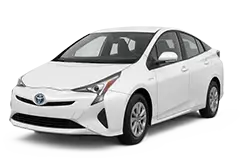
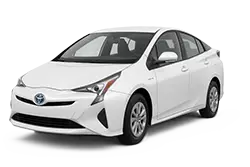
”The hybrid battery on my prius started dying and I managed to drove to the shop so I left it with them and told me they’ll finish it by tomorrow at 11am but they done it a lot earlier and faster than I expected. The car was running great again with the purchased of 12 month warranty remanufactured. I’m highly satisfied with the work they’ve done and I recommended them big time.”
Ellrick Garcia
February 13, 2025



Why pay more at the dealership? At Greentec Auto, we offer affordable, accessible and reliable hybrid battery replacements at up to 50% less than dealership prices without compromising on quality. Get the best value with expert service, mobile installation, and a warranty you can trust.

The cost of shipping to you is included with your purchase. This offer is good for the entire continental United States. Add $200 for shipping to a residential address. Let Greentec Auto make it simple to return your core to us, ask about our reduced return shipping rates.

A refundable “core deposit” of $500.00 will be added to your order at checkout. Once we receive your old battery, we will refund the core deposit back to you minus the cost of return shipping. Cores must be returned within 45 days of purchase. This applies to shipping orders only. In all other circumstances, the core will be picked up at the time of service, no deposit required.

Once your new hybrid battery has arrived, put the core battery back into the same packaging your battery arrived in. As soon as we receive your core battery, we will refund the core deposit back to you. It’s that easy.
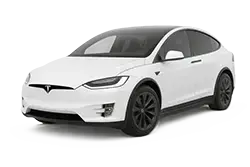
Greentec Auto replaces Tesla Model S high voltage packs across Canada, priced by capacity from $10,799 to $19,699 CAD.
Two things make this different from every other battery replacement on our site, and both are worth knowing before you look at the prices.
You can come out of this with more range than your Model S had when it was new. A 60, 70 or 75 kWh car does not have to go back as a 75. It can go to 85, to 90, or to 100. For a lot of owners the failing battery turns out to be the moment the car finally becomes what they wanted it to be.
Supercharging still works afterward. That sentence disqualifies most of the aftermarket, and in a country this size it is not a detail.
| Pack | Approximate range | Price (CAD) |
|---|---|---|
| 100 kWh | around 465 km | $19,699 |
| 90 kWh | around 385 km | $16,499 |
| 85 kWh | around 355 km | $12,590 |
| 75 kWh | around 320 km | $10,799 |
Prices shown may not be current. Confirm the figure on the product listing before ordering, or send us your VIN and we will verify both the price and the correct pack for your car.
Tesla badged these cars by capacity and drive layout rather than by trim name, so match whatever is on the back of yours:
| Your Model S | Pack you would normally take |
|---|---|
| 60, 60D, 70, 70D | 75 kWh, which is already a capacity increase |
| 75, 75D | 75 kWh, or step up |
| 85, 85D, P85, P85D | 85 kWh, or step up |
| 90, 90D, P90D | 90 kWh, or step up |
| 100D, P100D | 100 kWh |
If the badge came off years ago, or the car was bought used and nobody is certain, send us the VIN. We will tell you exactly what left the factory in it.
This is worth a proper explanation, because most Model S owners have no idea it is possible.
When your pack fails, you are already paying for the hardest and most expensive part of the job: getting the car on a hoist, dropping a structural floor component out of the underside, programming the new pack to the vehicle and verifying it. That labor is the same whether the pack going back in is the size that came out or a bigger one.
So the marginal cost of more range is only the difference between the two packs. Stepping a 75 kWh car to a 100 kWh pack is the cheapest range you will ever buy for a Model S, and you will never get another opportunity at this price, because the expensive work is already happening.
What you actually gain:
Distance. A 75 kWh car sitting around 320 km moves to roughly 465 km on a 100 kWh pack. In Canada that is the difference between planning a trip around chargers and simply going.
Winter headroom. Every EV loses range in a Canadian winter. Losing a third of 465 km leaves you somewhere entirely different from losing a third of 320 km. The owners who feel winter range loss most acutely are the ones with the smallest packs, which is exactly who benefits most from stepping up.
Fewer stops, shorter stops. More capacity means fewer charging sessions for the same weekly distance.
Performance. A larger pack delivers more current.
The car has to be programmed to the new pack so it reports its capacity and range correctly, and we cycle test the finished vehicle through full charge and discharge before it goes back to you. A car that displays 100 kWh on the screen and delivers 85 in the real world is not an upgrade, it is a problem.
Search this and you will find Canadian owners in forums saying an aftermarket pack kills Supercharging access. For most aftermarket and module level repair outfits, that is accurate. The pack does not communicate correctly with the vehicle, the car restricts or disables Supercharging, and the owner is left with a car that only charges at home.
In Canada that consequence is sharper than it is almost anywhere else. Outside the Windsor to Quebec City corridor and the Lower Mainland, DC fast charging thins out quickly, and any trip of real distance depends on it. A Model S that cannot Supercharge is not a car you drive to another province.
Our Model S replacements keep Supercharging functional. Ask that question of every company you phone, before you discuss price, because the answer decides whether the car remains useful to you.
If that message is on your screen, read this before you price a battery, because it is almost certainly not a battery problem.
Inside your high voltage pack sits a pyrotechnic fuse, usually called the pyro fuse. Its only job is to sever the high voltage circuit instantly in a collision so the pack cannot feed a short or a fire. It is a safety device with a service life of roughly eight years, and the car monitors its condition and tells you when it is approaching the end.
The alert codes, and what each one means:
| Code | Meaning |
|---|---|
| BMS_u031 | Fuse is less than six months from end of life |
| BMS_u032 | Fuse is less than three months from end of life |
| BMS_w176 | Fuse is no longer functional |
| BMS_w179, BMS_w180 | Related fuse warnings |
What to actually do:
Seeing this on a 2016 to 2021 Model S in Canada is common, because those cars are hitting the eight year mark now. Bring it in. If a fuse is all you need, that is what we will tell you.
Here is a failure mode that barely matters in California and matters enormously here.
Your Model S has a heater that brings the pack up to a temperature where it can safely accept and deliver power. In a Canadian winter that component is working constantly, and when it stops working you get symptoms that look very much like a dying battery:
None of that is the pack failing. It is the pack being cold and unable to warm itself.
Why this matters commercially to you as the owner: a heater fault is a fraction of the cost of a pack, and a Canadian owner who skips the diagnostic and goes straight to a replacement quote can spend five figures solving a problem that was never the battery.
If your Model S behaves badly in January and acceptably in July, get the heater and the thermal system checked before anything else. Our diagnostic covers it.
Tesla covers the Model S battery and drive unit in Canada for 8 years or 240,000 km, whichever comes first, with a minimum of 70% capacity retention. The clock runs from the original in service date, not from the day you bought the car, which matters a great deal if yours came to you used.
If you are inside that window, go to Tesla and make them honour it. Do not spend money with us or anyone else first. Take your VIN to a service centre and have them confirm the in service date and whether coverage is still open.
The eight year mark is where the pattern sits right now. A large population of Canadian Model S cars is crossing it, coverage lapses, and that is precisely when the first range complaints and pack faults appear. If you are at seven years and change with symptoms, get it in front of Tesla immediately.
Pack failure is almost never the whole battery dying at once. It is one of these:
A weak internal short in a single brick. Can happen at any distance and at any age. Tesla technicians will tell you it is not necessarily caused by Supercharging. It simply occurs.
Moisture getting inside. Corroded sensors, failed valves, degraded seals. Canadian road salt, slush and repeated freeze thaw cycling are hard on pack seals, and we see more moisture related failure here than in dry climates.
Cooling system failure. Model S packs are liquid cooled, and the same system that sheds heat in August warms the pack in February. When coolant stops circulating, the pack cannot regulate itself in either direction.
Voltage imbalance. One module drifts away from the rest and the pack stops functioning as a unit.
Accumulated thermal cycling. Canada asks a pack to survive +35 °C and −30 °C within the same twelve months. That annual swing is harder on a battery than a steady climate at either extreme.
And here is the part owners find surprising: when one section fails, the whole car stops. Not because every module is dead, but because the computer will not operate the vehicle on a pack it cannot trust. A Model S that will not move frequently has one bad section and fifteen healthy ones. It is also why a failed Model S pack is very rarely actually worthless.

This is what separates a replacement that lasts from one that buys you six months, and it is the part of the job you should interrogate hardest when you phone around.
A Model S module contains more than cells. Each one carries a temperature sensor and a monitor board reporting voltage and temperature back to the pack’s controller. Those components fail, and a shop testing only for dead cells will never find them.
Ask any company you are considering about these three by name:
Corroded capacitors on the battery management system. The protective coating on the board degrades over the years, and once it does, moisture reaches the components beneath it.
Voltage tab corrosion. Tabs corrode and work loose. Repairing them correctly requires specialized equipment most shops do not own, which is the actual reason most shops do not look.
Faulty umbrella valves. These are the pressure equalization valves on the pack. When one fails, moisture gets inside.
Read those three in order and notice that the last one causes the first two. A shop that replaces a corroded board without finding the failed valve that admitted the moisture has treated a symptom and handed you back the cause.
Most owners picture a single large battery. It is not one battery.
A Model S pack is a case holding a set of individual modules, each containing a large number of small cylindrical cells. Every module carries its own battery monitor board, which measures that module’s voltage and temperature and reports upward. All of those reports feed a single battery management system, the pack’s brain, mounted inside the case.
The distinction matters when you are judging who should work on your car. The monitor boards collect raw data. The management system makes decisions, controlling charging, discharging, thermal management, cell balancing and the high voltage contactors, processing on the order of fifteen thousand data points every second to do it.
The cooling is liquid, and it runs inside the modules rather than around them. Open a Model S pack and you will see cooling lines threading through it and entering the modules themselves. Coolant carries heat out in summer and warms the pack in winter. It is a generation beyond the fan cooled packs used in conventional hybrids, and it is one more system capable of failing.
Thousands of components means thousands of possible faults. That is the honest way to think about a Model S pack, and it is exactly why testing has to happen module by module.
A cheaper offer exists: locate the bad module, change it, close the pack, return the car.
Think about a smoke detector running two AA cells. One dies. You replace that one and leave its partner in place. It works for a week. The second cell was always the same age as the first.
A Model S pack is that problem multiplied by thousands of components. A shop performing module level repair is identifying what has already failed. It has no method for identifying what is about to fail, and every remaining module has lived through the same decade of Canadian summers and winters.
Then there is resale. When you sell the car, a buyer asks about the battery, and the truthful answer is that one module is new and the rest are ten years old. One fresh piece in an aging pack. Any informed buyer prices that exactly as it deserves.
What we do instead: every module comes out. Every module is tested individually against a point checklist covering the sensors, the monitor board and the cells. Modules that do not meet standard are neither repaired nor reused, they go to Greentec Recycling. The pack is rebuilt from modules that passed and balanced so the finished battery behaves as a single unit.
That is why our warranties run to four years. We build the packs to last well beyond that term, which is the design target rather than a printed promise.
Most Canadian owners replace a pack not because the car stopped, but because half the range is permanently gone. That is a legitimate reason. You paid for the range.
On checking it yourself: the range estimate on the screen is a projection, not a health reading, and it adapts to how you drive, which means it can hide degradation. Real assessment means reading the pack data directly, module group voltages, capacity, and stored fault codes. Our diagnostic does that at no charge.
Eight to twelve years is the realistic range. The figures circulating online run to twenty. What we see is that fade starts appearing around the eight to ten year mark, which is close to where Tesla set the warranty.
Distance matters less than years and heat. A Model S is designed to retain roughly 70% to 80% of original capacity across its service life, and what pushes a car below that faster is:
Sustained heat. Still the dominant factor, even in Canada. Our summers do more lasting damage than our winters.
Routinely charging to 100% on nickel based packs. Tesla recommends a lower daily limit for exactly this reason.
Frequent deep discharges.
Hard acceleration and hard braking as a habit, not occasionally, as a pattern.
Skipping preconditioning in winter. Cold limits how safely a pack accepts or delivers power. That is chemistry rather than software, and preconditioning exists to manage it. This is also where a failed battery heater causes real harm rather than just inconvenience.
For daily use on a nickel based Model S, keeping the charge between roughly 20% and 80% is the single most effective habit available to you.
And on why charging slows past 80%: picture a car park. Empty, you find a space instantly. At 80% full, you circle. Lithium ions behave the same way. As the pack fills it becomes progressively harder for ions to find somewhere to sit, so the charge rate tapers. That taper is normal on a healthy pack. A pack that tapers hard at 50% is not.
Model S installation is shop only. We offer mobile installation on many conventional hybrids. We do not offer it for Tesla, because dropping a structural floor pack safely requires a hoist and equipment that does not travel. Anyone offering to do a Model S pack in your driveway is telling you something about how they work.
How the job runs:
On shipped orders, a refundable $500 core deposit applies, returned once your old pack reaches us, less the cost of return shipping. When we do the installation there is no deposit, because the old pack leaves with us.
Greentec Auto has been replacing hybrid and EV batteries since 2012, at more than 30 locations across the U.S., Canada, and the U.K.
Modules that still perform are tested, balanced and used in remanufactured packs.
Modules that fall short go to Greentec Recycling, where lithium ion packs are processed to recover lithium and cobalt that return to building new batteries rather than being mined again.
Some modules are given a second life rather than being broken down, passed to Greentec Energy for home energy storage and EV conversion work, where a module that no longer meets automotive standards still holds plenty of useful capacity for a stationary application.
If you notice warning lights on your dashboard, don’t rush to the dealership for an expensive diagnostic report. Many local auto parts stores can scan your vehicle and provide error codes for free just ask them to run a quick scan with a diagnostic tool.
Above, we’ve listed some of the most common hybrid error codes. Keep in mind that the check engine light must be onfor major issues to be detected. If your vehicle is experiencing hybrid battery failure, dealerships often charge thousands of dollars for a replacement typically with a limited warranty.
At Greentec Auto, we offer a cost-effective alternative, providing high-quality hybrid battery replacements at a fraction of the price. Plus, we back our batteries with a comprehensive warranty to give you peace of mind.
Yes, and it is the cheapest range you will ever buy for this car. The labour is identical whether the pack going in matches the one coming out or is larger, so you only pay the difference between the packs. A 75 kWh car moving to a 100 kWh pack goes from roughly 320 km to roughly 465 km.
With most aftermarket and module level repair companies, no. With ours, yes. Ask every company you phone that question before you discuss price, because in Canada a car that cannot Supercharge is a car you cannot take out of your own region.
Almost certainly not. That alert refers to the pyrotechnic fuse inside the pack, a crash safety device with roughly an eight year service life. The codes are BMS_u031 at under six months remaining, BMS_u032 at under three months, and BMS_w176 once the fuse is no longer functional. It is a fuse job, not a pack job, and the price difference is enormous.
Possibly not. A failed battery heater produces exactly that pattern, along with very slow cold weather charging, reduced power warnings below freezing, a battery heating unavailable message, and regen that never returns on a cold drive. It is a fraction of the cost of a pack. Have it checked before you accept a battery quote.
Because the computer will not operate the vehicle on a pack it cannot trust. A Model S that will not move frequently has one bad section and the rest in good condition, which is also why a failed pack is rarely worthless.
*Offer cannot be combined with other promotions.